All Small Six Lower Clutch Rod Release Lever and Spring - Need Some Help

This relates to all small sixes

65MustangI6

Active member
Subscriber
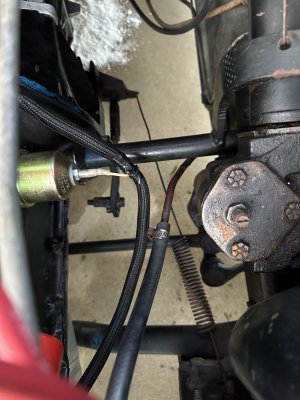
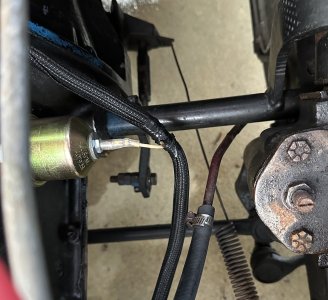
Looking for some assistance regarding the lower clutch rod release lever and spring.

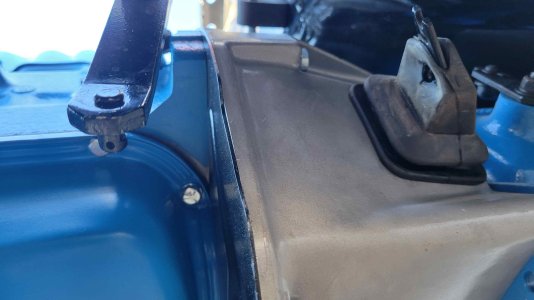
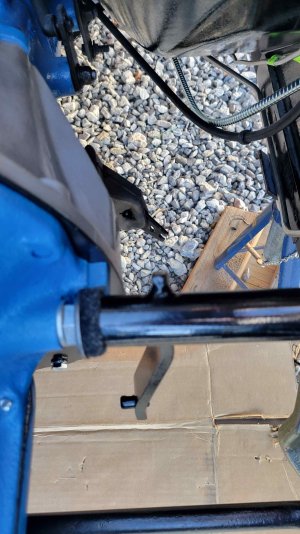
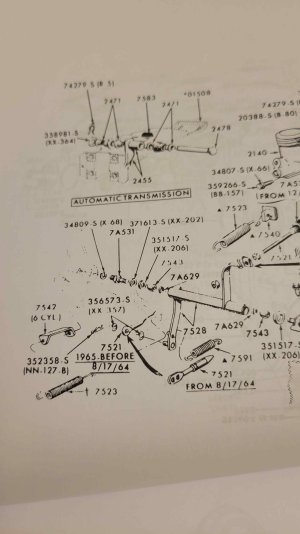
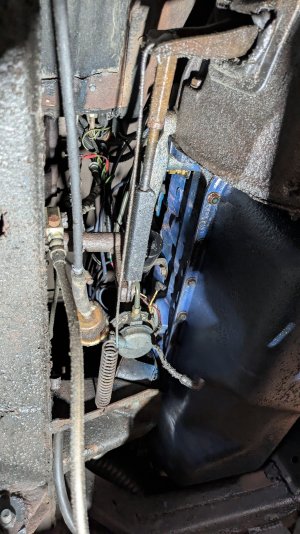
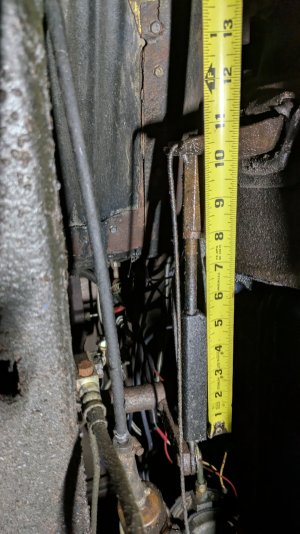
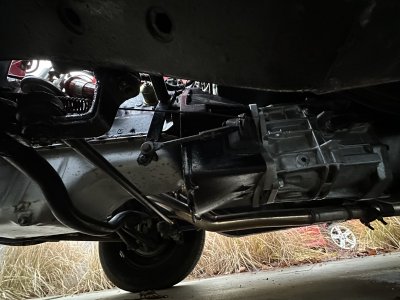
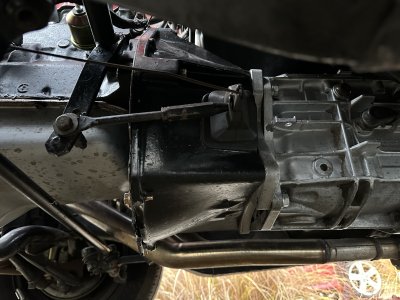
I have a 1964.5 Mustang with a 200ci engine, 3-speed manual transmission. The original engine was swapped out prior to me owning it with a 1968 200ci from a Falcon (if I'm reading my codes correctly). In either case, I don't have the lower clutch rod release lever and spring and would like to purchase a new one. I may have found the correct release lever, but I'm not 100% sure as both the ones I've found on NPD or CJ Pony show it's for the V8 and they don't mention anything about the I6. Furthermore, I'm confused about the spring as the Ford manual exploded view of the clutch shows that prior to 8/17/64 one end of the spring attaches to the clutch fork, but I can't tell where the other end of the spring connects.

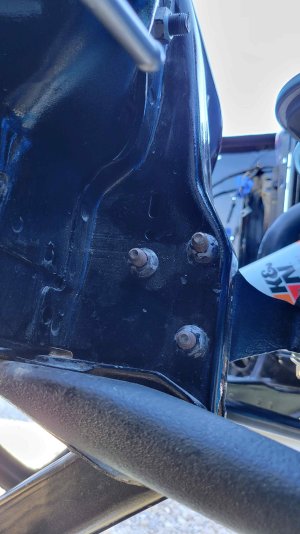
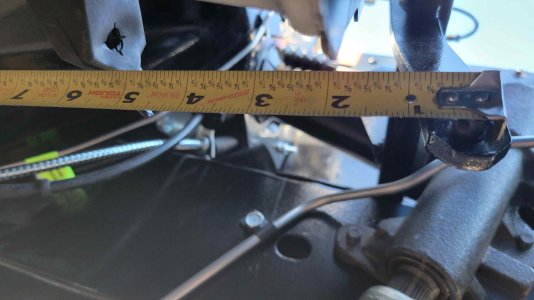
The clutch is 9" with the flat flywheel. As they say, a picture is worth a 1,000 words, so I've included some photos to highlight what I'm referring to. My Z bar has one post for the clutch release lever, but that's all - no holes for the spring. The distance from the Z-bar post to the clutch fork is about 6" when the clutch is in the neutral position and approximately 5" if the clutch were engaged.

Any help clarifying the correct parts and spring mounting locations would be extremely appreciated. Photos would be great if you have those to.

Thanks in advance!
 

Attachments

  • 20260119_150249.jpg
    20260119_150249.jpg
    332.8 KB · Views: 27
  • 20260119_150536.jpg
    20260119_150536.jpg
    776.2 KB · Views: 23
  • 20260119_150656.jpg
    20260119_150656.jpg
    821.7 KB · Views: 19
  • 20260129_184251.jpg
    20260129_184251.jpg
    484.1 KB · Views: 20
Hi, I just got time to look under my 66 Bronco.
I can't imagine that the setup in a car would be much different.
The return spring goes to the cross member.
The push rod had to be lengthend after a new clutch and flywheel resurface. Good luck
 

Attachments

  • PXL_20260131_151812078.MP.jpg
    PXL_20260131_151812078.MP.jpg
    1.7 MB · Views: 14
  • PXL_20260131_151847586.jpg
    PXL_20260131_151847586.jpg
    1.3 MB · Views: 17
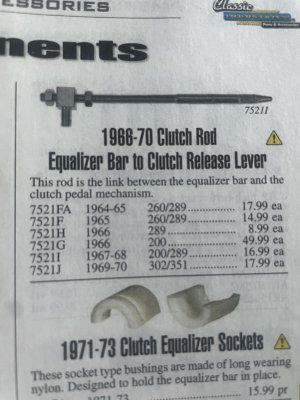
in case you haven’t run across this yet, I think this is the rod you were looking for. From Classic Industries
 

Attachments

  • IMG_5060.jpeg
    IMG_5060.jpeg
    2.1 MB · Views: 20
the early cars had the stud on the Z bar and later had a hole for the adjustable push rod with post on the rod like above pic'. Early Zbars and later Zbars are interchangeable but will require accommodating for suitable pushrod. I added an old ball bearing to get the correct length to the early non-adjustable pushrod .
.
... swapped in a later Toploader BH/Clutch in the '63, the Zbar neeeded the geometry changed and more level to the Throwout arm for better pedal travel and clutch in/out. Later Zbars have the Zbar fulcrum geometry closer to the pivot resulting in less travel and more pressure. This works great for Diaphragm clutch and Toploader FW. Early cars had length adjustments on the rod from cabin clutch pedal to the Zbar. Improper adjustments or mixed parts often cause the pedal to not want to fully return all the way up. Not clear which cars have the over-center spring under dash to assist return.
.
71 Maverick and '61 Zbars ...
.. . . .
.
have 3 pedal fun
 
I just did this assembly (adding a clutch pedal and z-bar) on a 66 mustang this weeekend. Similar to the pick of the Bronco setup above, there is a spring going from the clutch fork to the shock tower. There is a slot and hole near the base of the chock tower and a 14" long spring that attaches there. I know the shop manual says it's only for V8 cars but it worked well on my six.

This spring really helps the pedal return to the up position as it should.
 
Hi, I just got time to look under my 66 Bronco.
I can't imagine that the setup in a car would be much different.
The return spring goes to the cross member.
The push rod had to be lengthend after a new clutch and flywheel resurface. Good luck
Thanks for the photos. I plan to crawl under there this weekend and will look to see if the Mustang has a similar set up. I appreciate the response.
 
in case you haven’t run across this yet, I think this is the rod you were looking for. From Classic Industries
Thanks Don for the information. I think this is for a different set up than the one I have. My Z-bar does not have a hole in the end of it but rather a stud and a small hole through the stud. From my research I think the clutch rod slips over the post and is held in place with a hitch pin. Nevertheless, thanks for the information as I did not have it and if I'm wrong I'm glad to have options. Thanks again.
 
the early cars had the stud on the Z bar and later had a hole for the adjustable push rod with post on the rod like above pic'. Early Zbars and later Zbars are interchangeable but will require accommodating for suitable pushrod. I added an old ball bearing to get the correct length to the early non-adjustable pushrod .
.
... swapped in a later Toploader BH/Clutch in the '63, the Zbar neeeded the geometry changed and more level to the Throwout arm for better pedal travel and clutch in/out. Later Zbars have the Zbar fulcrum geometry closer to the pivot resulting in less travel and more pressure. This works great for Diaphragm clutch and Toploader FW. Early cars had length adjustments on the rod from cabin clutch pedal to the Zbar. Improper adjustments or mixed parts often cause the pedal to not want to fully return all the way up. Not clear which cars have the over-center spring under dash to assist return.
.
71 Maverick and '61 Zbars ...
.. . . .
.
have 3 pedal fun
Thanks for the photos powerband. The one photo with the two different Z-bars is very helpful as I can clearly see the difference between the two. My Z-bar is the red one in that photo without the zerk fitting in the center pivot portion of the bracket. I was thinking I didn't need to modify anything and just purchase an off the shelf adjustable clutch rod. It looks like that may not be the case and I'll have to experiment a bit to get the clutch feel and travel I'm looking for. Appreciate the help!
 
I just did this assembly (adding a clutch pedal and z-bar) on a 66 mustang this weeekend. Similar to the pick of the Bronco setup above, there is a spring going from the clutch fork to the shock tower. There is a slot and hole near the base of the chock tower and a 14" long spring that attaches there. I know the shop manual says it's only for V8 cars but it worked well on my six.

This spring really helps the pedal return to the up position as it should.
Okay, that's good to know motopsycha. I'm working on the car this weekend so I'll check out the shock tower location. It's becoming obvious that I was looking for a spring clip location too close to the clutch fork and Z-bar and need to look closer to the cross member and shock tower like you and B RON CO mentioned. Thanks for the guidance!
 
I just took some photos from the engine compartment and underside of my 66 Mustang. It came with a Top Loader 3-Speed and I’ve converted to a T5 but from the bell housing forwards, it’s all original. Hopefully these are clear enough to help out.

IMG_3883.jpeg IMG_3884.jpeg IMG_3887.jpeg IMG_3885.jpeg
 
Okay, that's good to know motopsycha. I'm working on the car this weekend so I'll check out the shock tower location. It's becoming obvious that I was looking for a spring clip location too close to the clutch fork and Z-bar and need to look closer to the cross member and shock tower like you and B RON CO mentioned. Thanks for the guidance!
Regardless of final linkage geometry, there must be a long strong spring to keep the whole system in release tension. Primary reason is, without it there's no positive retraction of the throw out bearing, there will be no free play. Once the clutch disengage pressure is released near the top of pedal travel, the bearing, linkage, and pedal have to be positively pulled away from the clutch forks and the pedal seated against the stop under the dash. The spring from the fork to the tower (or where ever) does this critical job.
 
Last edited:
Hi, it looks like the return spring is stretched out too much right now. Can you find a longer spring, or a closer hook point? Also, from the angle of the picture, it looks like the push rod is going up hill. I could be wrong, but if it is not level, perhaps a different Z bar would fit better. Good luck
 
Hi, it looks like the return spring is stretched out too much right now. Can you find a longer spring, or a closer hook point? Also, from the angle of the picture, it looks like the push rod is going up hill. I could be wrong, but if it is not level, perhaps a different Z bar would fit better. Good luck
I don’t think @65MustangI6 has posted a photo of his setup with a spring. Those photos on Post #10 are mine to show how it looks in an early Mustang.

That’s the OEM z-bar, pushrod and spring, except I think the bolt where the pushrod and Z-Bar pivot must be something a previous owner cobbled together. I think the previous owner to me bought it from an estate and at some point the car was stripped and painted so parts were probably misplaced.

The push rod is at an uphill angle. There’s no getting around having the push rod moving back towards the transmission without moving in an arc.

I’m not sure if that is the correct location for the spring on mine. It’s where it was when I got the car and it’s under nominal tension. You can pull it out by hand without breaking a sweat.
 
I don’t think @65MustangI6 has posted a photo of his setup with a spring. Those photos on Post #10 are mine to show how it looks in an early Mustang.

That’s the OEM z-bar, pushrod and spring, except I think the bolt where the pushrod and Z-Bar pivot must be something a previous owner cobbled together. I think the previous owner to me bought it from an estate and at some point the car was stripped and painted so parts were probably misplaced.

The push rod is at an uphill angle. There’s no getting around having the push rod moving back towards the transmission without moving in an arc.

I’m not sure if that is the correct location for the spring on mine. It’s where it was when I got the car and it’s under nominal tension. You can pull it out by hand without breaking a sweat.
My setup looks very similar. That spring location looks the same as what is in the shop manual and lines up with the holes I had from the factory on my 66.

I fabbed a z-bar myself taking measurements for the upper and lower arms from a V8 example. I have my lower pushrod roughly level.
 
My setup looks very similar. That spring location looks the same as what is in the shop manual and lines up with the holes I had from the factory on my 66.

I fabbed a z-bar myself taking measurements for the upper and lower arms from a V8 example. I have my lower pushrod roughly level.

Good job on fabbing a custom version. I wondered how difficult that would be to do.

I've thought I'd like to change the bolt for the pushrod pivot on mine. I think I might replace it with a bolt and a short sleeve so that the pivot point rides on the sleeve with a flat washer, lock washer and a nylock nut to hold it in place.

I'd also like to move the pivot on mine up so that it's either level, like yours and @B RON CO's or maybe up slightly. I'm using a "modern" diaphragm pressure plate with the T5 and it doesn't need as much movement as the old style 3-finger pressure plate needed.
 
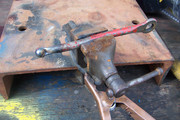
Fabbing the bar was not too hard. Having a V8 unit on hand was invaluable. I determined the width based on some online posts as a starting point and then verified on the car.

I started with a solid bar and bored each end to the correct ID. For the arms I used some bar stock that was a similar thickness to the stock unit and created the curves with some heat and leverage. I figured the upper arm should be the same shape and position. The lower one I shaped and determined position after mocking everything up.
 
Back
Top