All Small Six 250 Engine Build

This relates to all small sixes

twentyover

Well-known member
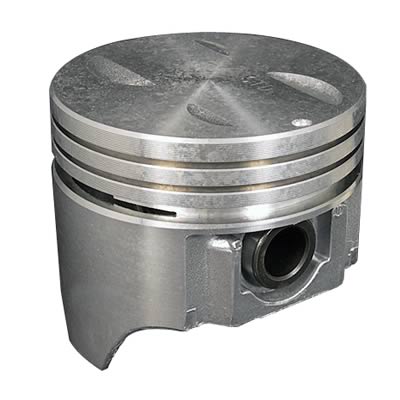
Am considering undertaking a 250 engine build using the 2,5 rods and 3332 pistons. The target car is an old English sportscar that came with a 2.9l engine that was overweight and oversize. And underpowered. The plan would be to make the swap keeping the body pretty much uncut so it could go backward if I ever lose my mind. A requirement is that the car have a manual transmission.

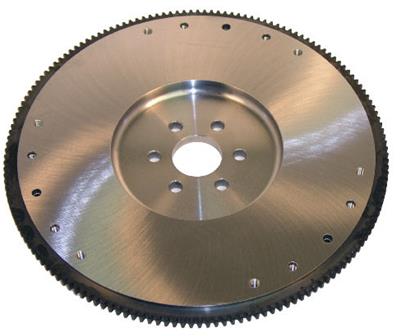
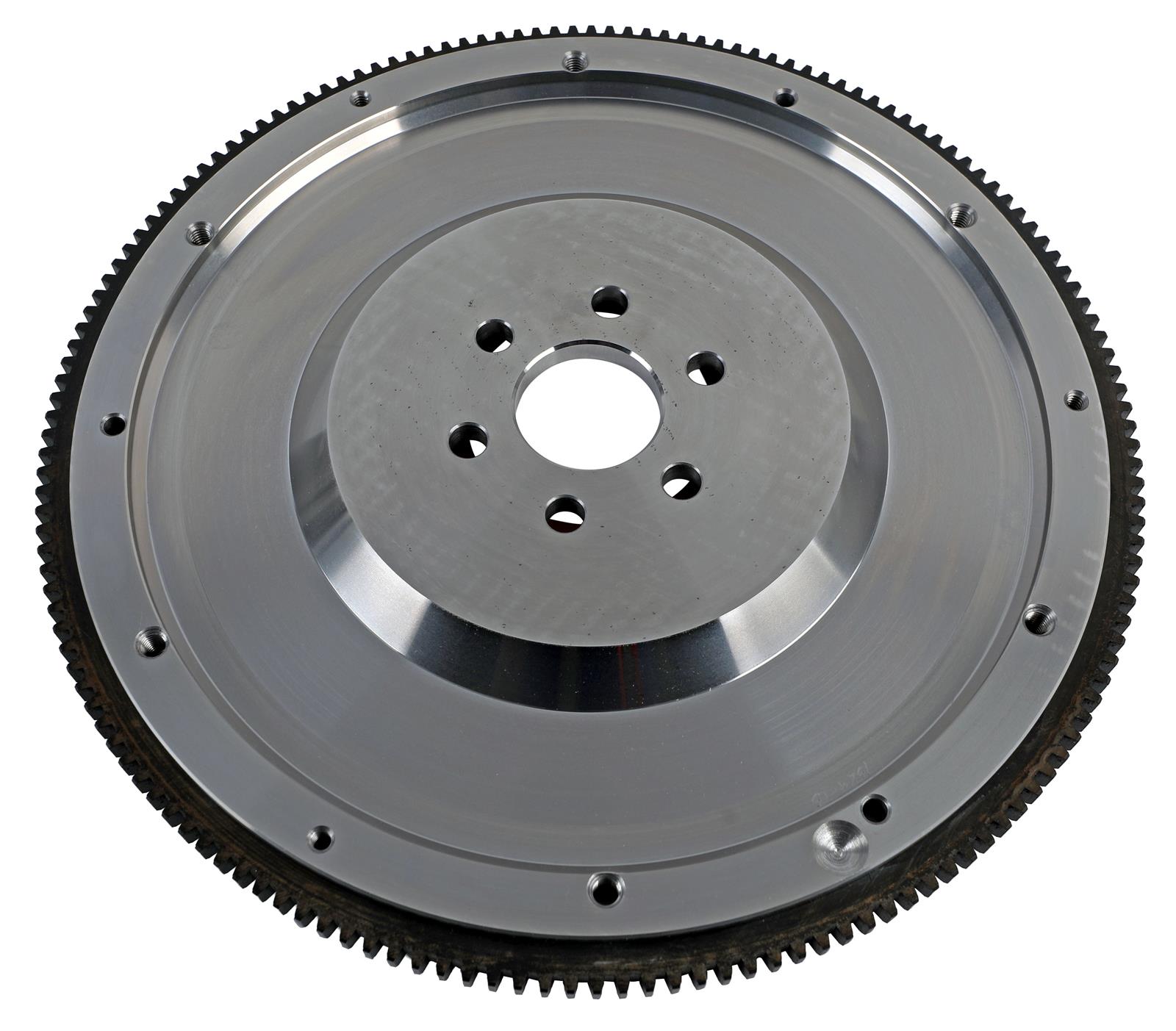
Trying to find a flywheel for a 250. Unlike the 200's, it seems these are unicorns. I understand they are the same diameter as 302 wheels- is the crank bolt pattern different, a different balance factor, or what? What makes them unique?

In a fever dream, if I follow thru with this plan and am unable to find a flywheel, I thought maybe start with an automatic flex plate, have an aluminum disc machined to the correct diameter, and cut so a steel clutch surface is installed. I've gotta cut down on the pizza before I go to bed
 
Same crank flange as a 289/302, neutral balance, so you cant use a V8 unit. you try a neutral balance steel flywheel for a V8. 2.5 rods? just use the stockers. If the rods are forged, then with a stock head, you wont have a problem. 3332 pistons, looks like they have a big dish and depending on your head will give low compression, OK for your unleaded fuels. This is for an Austin healy or MGC?
 
What trans are you looking to use? Haven't seen any post on here, been wondering if a M5OD-R2 from a V8 is possible behind a 250, T5 alternative, wouldn't need an adapter, and way less cost overall.

Been happy with the M5OD-R1 in my Ranger, but the 4-banger 2.3l in front of it isn't much on the power side. 380k miles, zero transmission issues.
 
Last edited:
Same crank flange as a 289/302, neutral balance, so you cant use a V8 unit. you try a neutral balance steel flywheel for a V8. 2.5 rods? just use the stockers. If the rods are forged, then with a stock head, you wont have a problem. 3332 pistons, looks like they have a big dish and depending on your head will give low compression, OK for your unleaded fuels. This is for an Austin healy or MGC?
The US 250 has about -.126 deck height, the 2.5 rods are longer also forged and with the right piston, it gives you a better rod ratio, lighter piston, zero deck height for a better squish/ quench for better combustion and more compression if wanted..
 
Following Lavron's build, he used the 2.5 rods and started with the 3332 pistons. Trying to reduce deck height. Ultimately Lavron went with stock pistons (IIRC) since he had negative deck with the 3332's (and they were the wrong bore diameter), I believe that if the pistons were the correct bore diameter, you could cut the top of the piston face to reduce pop-out and get closer to zero deck. Should have enough thickness in the perimeter around the dish to make this a low risk move.

Read a Dema Elgin bit many years ago in a book now long lost that indicated if you went more than about .040 quench clearance, you might as well go .080 as reduced compression had less impact than increased propensity for detonation from the larger quench crevice. Or something like that. Bein' as I'm a fat old retired guy, I forget alot, and am mostly delusional.

------

Wait- no reference to TR6 or GT6 or XK? (OK the last one was a reach). But you are right, MGC. Block has a 3.5" stroke, 10.25" deck height, 6.6" rod (that weighs almost 1200 grams- I had a set beam polished and shoot peened- still came in at 1070 grams. Later- had a set of custom Pauter rods made- 690 grams each @ 7.2" center to center. Will take over 8 lbs from the recip/rotating assembly. Engine will still be overweight.)

--------

Neutral balance 302 flywheel will work? I always assumed that the external balance on a SBF was cast into the flywheel. Shows how much of a Ford guy I am (I real kinda am a Ford guy- have an F150 and wife drives an Explorer when she's not in her Volvo- and I'm building a Ford (Mercury in the US) Capri w/ a 302) So don't be coming after me with torches and pitchforks. This means getting an aluminum flywheel will be easy. With lhe lighter weight of the car (compared to a Mustang.....) and the car has a 3.31:1 rear end ratio- was an automatic- in a so-called sports car?

-------------

Trans would be a T5. I have a T5Z that's going in the Capri, and some normal 3.35:1 first gear V8 transmissions out in the barn.

---------------------------

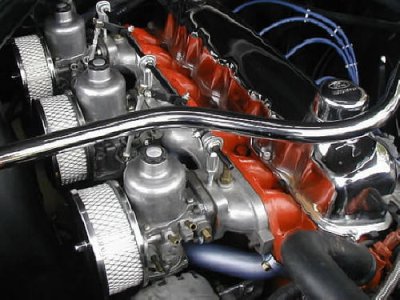
Options Options Options- Back when the dinosaurs roamed the earth, I bought one of the Classic Inlines aluminum heads- doestens was helping the family divest inventory after the founder's death and before Matt bought the remaining assets. Stupid expense when I bought it- just been put out to pasture (pasturized?) by my employer, but now maybe a bonanza. I also bought a triple SU manifold for the aluminum head from Matt back when I lived in the burbs of Detroit. So's I get me a little cam, three HS6 carbs, and an aluminum valve cover and the deception is complete- except now the carbs and exhaust are on the wrong side of the engine.

------------------------------------

Thanks to all who posted responses- this forum is as good as my other go-to, the MG Experience forum
 
Last edited:
Am considering undertaking a 250 engine build using the 2,5 rods and 3332 pistons. The target car is an old English sportscar that came with a 2.9l engine that was overweight and oversize. And underpowered. The plan would be to make the swap keeping the body pretty much uncut so it could go backward if I ever lose my mind. A requirement is that the car have a manual transmission.

Trying to find a flywheel for a 250. Unlike the 200's, it seems these are unicorns. I understand they are the same diameter as 302 wheels- is the crank bolt pattern different, a different balance factor, or what? What makes them unique?

In a fever dream, if I follow thru with this plan and am unable to find a flywheel, I thought maybe start with an automatic flex plate, have an aluminum disc machined to the correct diameter, and cut so a steel clutch surface is installed. I've gotta cut down on the pizza before I go to bed
Finally got some parts in hand. Ended up with E63E rod that measured 6.045" . Pistons are 3332H Australian 250. They have 28cc dish. Since the rods are NOT 5.99" it pushed piston above deck about .050" . After cutting crown to meet deck, dish will be about 23cc. All this with 54cc head puts me at 9.25 cr . If the rods had been published length it would have worked out perfect. I suspect this is what went awry in Lavrons build.
See my experience with HSC rods and 3332h pistons. Here in the US I believe I bought the last available rods from rebuilder
 
Interesting stuff, comet6. I read the thread, and you're sayin' the rods you got were not the published length. This doesn't change my thought as I suggested the fix you did with the 3332 pistons.

Clegg is currently showing in stock on the rods, so we'll see if I end up pursuing this build
 
Ok guys, just for my education, tell me the lengths of your common small six rods.
heres the Australian ones:- early 200, 4.71. 188, 5.47. 221, 5.155. later 200, 6.27. 250, 5.88.
We never had the 2.5litre 4 pot, which sounds like a bit of a dog.
SOHC engines were same as 250s until AU, the went to longer 6.05, barra is the same.
This is from memory which may be a bit hazy.
All our rods are forged.
So tell me what the USA versions are?
 
Interesting stuff, comet6. I read the thread, and you're sayin' the rods you got were not the published length. This doesn't change my thought as I suggested the fix you did with the 3332 pistons.

Clegg is currently showing in stock on the rods, so we'll see if I end up pursuing this build
Call a human at Clegg before you get too far. They had 1 in Colorado? and 2 in Texas last I talked to them. They were kind enough to physically measure one to correlate my dimensions. I measured all 6 on CMM and were within .001" ctc.
 
We never had a tall deck 200, so all 200's had 4.715 rods, 250's had 5.88

And your right- the 2.5 HSC was... unspectacular
 
Last edited:
We never had a tall deck 200, so all 200's had 4.715 rods, 250's had 5.88

And your right- the 2.5 HSC was... unspectacular.
Your other option would be to use Ford 300 rods and custom RiceTec pistons. More expensive but this will suit you well as can be tailored to your desired compression and use metric/modern ring packs.
 
Am considering undertaking a 250 engine build using the 2,5 rods and 3332 pistons. The target car is an old English sportscar that came with a 2.9l engine that was overweight and oversize. And underpowered. The plan would be to make the swap keeping the body pretty much uncut so it could go backward if I ever lose my mind. A requirement is that the car have a manual transmission.

Trying to find a flywheel for a 250. Unlike the 200's, it seems these are unicorns. I understand they are the same diameter as 302 wheels- is the crank bolt pattern different, a different balance factor, or what? What makes them unique?

In a fever dream, if I follow thru with this plan and am unable to find a flywheel, I thought maybe start with an automatic flex plate, have an aluminum disc machined to the correct diameter, and cut so a steel clutch surface is installed. I've gotta cut down on the pizza before I go to bed
Sounds like a good upgrade. How much does the old English car weigh?
 
So comet6 was right- looks like Clegg is a dry hole for HSC rods. So's I gets to thinkin'- A Barra rod is 6.057, about what comet6 says the HSC scaled at. To confirm it might work, and went to the tech section of this website- and think I found what I want. Going off in another direction

Jack C., Mustangsix- who as I understand it either started or helped in starting this website- has a build listed for a 250

This engine wasn't supposed to become a NASA budgeted science experiment, just a cheap and simple deal I could drop into the MGC. To pump up it's relatively lame 140 Shetland ponies.

Stock rods, 255 V8 pistons (1.585 CH) and a .040 deck reduction and almost to zero deck height. Mustang six estimated 185 @ the crank w/ a log, mild cam, and single barrel, based on vehicle weight and 1/4 mile et. With an aluminum head and triple SU's I would think I could end up with a pretty sweet 200 crank.
 

Attachments

  • su 1.jpg
    su 1.jpg
    44.7 KB · Views: 10
Sounds like a good upgrade. How much does the old English car weigh?

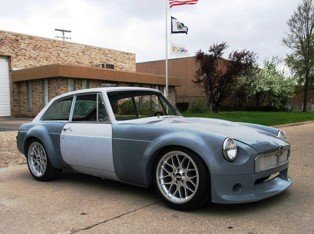
About 2500 lb- haven't scaled it, but a similar touring with a glass hardtop came in @2446 lb. I have the GT w/ a steel ceiling. I have steel variants of the glass blister flares shown, and will install them before paint
 

Attachments

  • What I want it to look like.jpg
    What I want it to look like.jpg
    22.2 KB · Views: 9
Stock rods, 255 V8 pistons (1.585 CH) and a .040 deck reduction and almost to zero deck height. Mustang six estimated 185 @ the crank w/ a log, mild cam, and single barrel, based on vehicle weight and 1/4 mile et. With an aluminum head and triple SU's I would think I could end up with a pretty sweet 200 crank.
I found these 255 v8 pistons.
 
Here's another recommendation. Per this thread.
Comment from PMuller
"Go with the early 300 rod and Autotec/Racetec piston
I did a similar deal on a 300 where I used the longer 240 rod with Autotec pistons.

The pistons are a forged 4032 alloy so the piston to wall clearance is still fairly tight (<.003") and they are cheaper than the 2618 alloy pistons.
You get to set the CH so the piston is at zero deck clearance without having to machine a lot off the top of the block deck.
You have the option of using the more modern/thinner ring set.
Pistons come with an accumulator groove between the top and second ring
With the longer 300 rod the piston will be shorter and lighter
Here what one of mine looks like with a 10cc dish

Find a set of the 1964 - 1968 forging# C5TE 300 rods (No Oiling Hole and .912" pin) and grind the forging lines off the beams. Then polish the beams and have the rods shot paeaned.
Then have them resized with ARP bolts"

Ebay link 6x OEM Connecting rod Ford 300 4.9 Inline 6 1964-1968 # C5TE-A .912 piston pin
 
Back
Top