
You are using an out of date browser. It may not display this or other websites correctly.
You should upgrade or use an alternative browser.
You should upgrade or use an alternative browser.
All Small Six Winter Project: Better breathing with a large log
- Thread starter awasson
- Start date
-
- Tags
- large log head
This relates to all small sixes


Well, easier said than done 
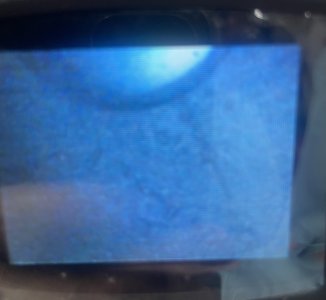
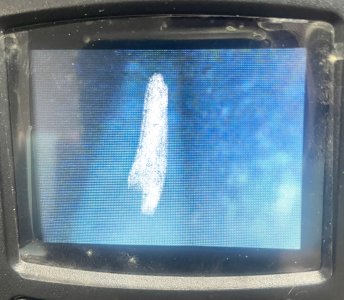
I took a few pics but hard to see. I put a coat hanger wire in for a reference for size. I marked the wire with a white stroke in the photo. In one you can see the freeze plug on the end. Overall don’t see much that needs work. It’s pretty much like what you can see down the hole. Probably not worth smoothing it out with the effort it would take.
 . Some kind of flapper sand paper to run thru the hole on the end? A long porting bit?
I took a few pics but hard to see. I put a coat hanger wire in for a reference for size. I marked the wire with a white stroke in the photo. In one you can see the freeze plug on the end. Overall don’t see much that needs work. It’s pretty much like what you can see down the hole. Probably not worth smoothing it out with the effort it would take.
. Some kind of flapper sand paper to run thru the hole on the end? A long porting bit?Attachments



Spacer height's effective performance is directly relative to intake total volume. Anything over 2" shows no improvement on any of the (all V8) tests I've seen. 2" did out perform 1" on the lower-height smaller intakes. On tall single plane intakes gains stopped at 1". . . All intakes benefitted from the 1", and individual-bore types were better than open, and that was attributed to the improved AFR distribution.Oh, another thing, I was thinking about is the 2v direct mount. @DON has a mounting plate brazed to his log with 2 circular intake openings. Was watching a spacer shootout where they dynoed different spacers on a V8 with the same 4 barrel to see what length effect was as well as spacers with individual holes or with one big opening. The spacers with the individual holes performed better in all ranges and in that particular engine, a 1” spacer performed better than a 2” spacer.
I realize a V8 4 barrel isn’t appples to apples to a small 6 with a modified log but I’m just looking at the overall trend. I think I will attempt to space it a total of 1” including the mount on the log
1" will be great on your log, 2" may be slightly better at high rpms where the plenum volume is being taxed. Just comments, not recommendation.

As for raising compression, shaving the head is good, but on heads I'm familiar with the actual chamber volume is not reduced much. Piston height causes the biggest change in static compression, assuming the piston dish is the same. Use the calculator and adjust head volume then adjust "Deck clearance". Moving the piston up closer to the deck makes a dramatic change, it's surprising. Of course without custom pistons we're stick with the height cast into the piston. (This is why I cut .026" off my deck. It was the only way to get to 9.75:1 without custom pistons.)
Compression Ratio Calculator | UEM Pistons
 uempistons.com

Thanks for the notes @Frank I figured a 1" spacer would be great. If there's enough room for 2", I'm not opposed to it as long as it doesn't affect hood clearance. With the original small log head and the 1.65 ratio rockers, it pulls to 5,500 in the first few gears quite fast but it does flatten towards the top. It would be great to have a stronger upper range. I am certain the direct 2V mount, larger back cut valves and larger log will make big improvements in the entire range.
I'm going to aim for a 9.5:1 compression ratio if I can have the head milled enough to achieve that. It should be possible to attain that but I should have milled the deck for zero inset when I built the engine. I had it milled just to ensure my gasket surfaces were square but my inset is +0.024".
Did you have a look at the discussion thread @NickC had about his Intake Port Divider with 2 Barrel Conversion? He put a radiused, triangular fixture below the 2 barrels to help flow the intake charge towards the intake runners. I will definitely be doing something similar with mine.
I'm going to aim for a 9.5:1 compression ratio if I can have the head milled enough to achieve that. It should be possible to attain that but I should have milled the deck for zero inset when I built the engine. I had it milled just to ensure my gasket surfaces were square but my inset is +0.024".
Did you have a look at the discussion thread @NickC had about his Intake Port Divider with 2 Barrel Conversion? He put a radiused, triangular fixture below the 2 barrels to help flow the intake charge towards the intake runners. I will definitely be doing something similar with mine.
All Small Six Thread 'Intake Port Divider with 2 Barrel Conversion'
Hello FordSix,
I finally finished my winter project: a custom-made intake port divider and 2-barrel conversion.
The engine is a 1978 large log 200ci installed in my 1964 Ford Falcon Futura (3-speed automatic). I video recorded timed acceleration tests and repeated them under three different configurations:
I finally finished my winter project: a custom-made intake port divider and 2-barrel conversion.
The engine is a 1978 large log 200ci installed in my 1964 Ford Falcon Futura (3-speed automatic). I video recorded timed acceleration tests and repeated them under three different configurations:
- 2-barrel carburetor with 2:1 barrel conversion
- Super Sniper 2300 EFI with 2:1 barrel conversion
- Custom intake port divider with 2-barrel conversion
- NickC
- 2-barrel conversion intake manifold port divider
- Replies: 21
- Forum: 144-250 "Small Block" Six Performance

It could be as simple as a piece of sheet metal bent with a radius and bonded to the floor of the log below the carb. It could also be done with epoxy putty. Guys used to shape the intake ports on racing heads with epoxy putty.You will have to keep me posted on how you do the deflector part. It is interesting but not sure how it would be fabed
EDIT: whatever I do will need to be high heat capable. The racing heads I was mentioning were aluminum so not nearly as hot an environment.
Oh, I was planning on it going in once and never coming out so I’d put it in before the plate is brazed in.Just thinking, whatever it is it has to fit thru the small bore hole that is brazed in the log
Dividers/flow directors are smart, the logic is obvious. A couple of thoughts- 1) Whatever is used in the intake must be strongly secured. History has shown the forces on the divider are significant, and perpetual. 2) A divider will reduce the already small plenum volume in two ways. A slight loss from the physical mass in the system. Mostly though, segregating an intake reduces the available volume at any given cylinder significantly, since only half the intake volume is available for the sudden gulp that occurs during each intake downstroke. A divided intake, like most V8's dual plane for example, always increase power at lower rpms, but fall off quicker at high rpms. Since the Ford6 log is small the loss of available volume with a divider is most likely going to have the same effect. The addition of a divider probably increases the potential positive effects of a taller spacer, as hood clearance allows. The opened up plenum and the 2V will offset the volume deficit also.
I thought that earlier in this thread it was stated that the deflector helped most at high speed. I could be mistaken
Yes, from the discussion @NickC had about his port divider, he found that the gains were best in the upper RPMs.
From the initial post in his discussion (https://fordsix.com/threads/intake-port-divider-with-2-barrel-conversion.91691/):
Interestingly, the calculated net traction horsepower gain was more pronounced at higher RPM rather than lower RPM. Given measurement limitations, there is some margin of error, but the improvement appears consistent.
Subjectively, drivability is noticeably smoother and more responsive. It is definitely quicker — though not quite Mach-E GT quick.
So many variables though….to the divider that is. Any of them could change the results
Oh, for sure but the way I see it, having a divider to direct the flow is better than not having one. I'm going to see if I can mill something like the one @NickC has. That way I can remove it and make adjustments.
It is always amazing, the function of fluid dynamics. Most of the time the physics is is contrary to human logic. There has to be so much trial/error testing of intake/port designs because the best looking layout on paper very often proves to not work as anticipated.
A big6 member Blairsville Ed has a 240 and a 300 powered truck. On the slightly modified factory log intake, stock engines, a center divider helped one engine but did not help the other. .
A big6 member Blairsville Ed has a 240 and a 300 powered truck. On the slightly modified factory log intake, stock engines, a center divider helped one engine but did not help the other. .
Good to know and thanks for the pics. Ford probably had adequate quality control standards for a critical area like this.Well, easier said than done
I took a few pics but hard to see. I put a coat hanger wire in for a reference for size. I marked the wire with a white stroke in the photo. In one you can see the freeze plug on the end. Overall don’t see much that needs work. It’s pretty much like what you can see down the hole. Probably not worth smoothing it out with the effort it would take.
Similar threads
- Replies
- 3
- Views
- 298


- Replies
- 1
- Views
- 706
All Small Six
Any Large Log Head Blueprints Available?
- Replies
- 4
- Views
- 1K

- Replies
- 0
- Views
- 212