It does run hot. Exhaust is so hot I have to wear a welding glove to operate the throttle linkage after running for five minutes. Back pressure from what? All new parts. Full vacuum at cruise.Dustyford- You're well informed, so that's good. The root of your weak performance is probably camshaft or valve spring related. However, vacuum controlled ignition advance plays a major role in snappy performance and fuel economy.
Ported vacuum IS intake manifold vacuum the moment the throttle blade exposes the port. If high idle vacuum is 20" (18 or so at your elevation), then the vacuum advance can sees 0" at idle. The moment the throttle is cracked opened the VA instantly goes from 0 to 20", or what ever the intake manifold vacuum is, immediately advancing the timing 15-25* (or where ever it is set for max advance) in addition to base timing + centrifugal timing. This is correct tuning.
The lighter the load, the more timing advance an engine needs. Vacuum is directly proportional to load at all times. Thus, a properly working vacuum ignition advance is a fine-tuner of ignition timing. It varies how much it advances as vacuum changes, working at all times if the throttle is above idle. It is a perfect judge: lighter load= more vacuum = more advance. Heavier loads = lower vacuum = less vacuum advance. WOT = 0" vacuum, no vacuum advance is added, correct for full throttle. . I've found that in an open combustion chamber engine, they perform best with generous vacuum advance tuned into the system.
One last question that we've all overlooked: does the engine try to run hot? Late timing, either ignition or camshaft, will cause the exhaust temperature to rise significantly. . . . And are you SURE there's no excessive exhaust back pressure- that can produce 100% of your symptoms.
Thanks for allowing us to take part in your query.

You are using an out of date browser. It may not display this or other websites correctly.
You should upgrade or use an alternative browser.
You should upgrade or use an alternative browser.
200ci Degree the cam?
- Thread starter Dustyford
- Start date
This applies only to 200ci
Is it possible that the TDC timing mark on the balancer is off and not really TDC as far as piston position?It does run hot. Exhaust is so hot I have to wear a welding glove to operate the throttle linkage after running for five minutes. Back pressure from what? All new parts. Full vacuum at cruise.
You can feel the piston position by use something through the #1 sparkplug hole to get the piston at TDC the best you can and then check the timing mark to see how close it actually is to TDC
My VA works at lower vacuum but it’s adjusted at 15”. I believe the correct VA for a ‘68 distributor was set for 5” at factory. I will try more timing. I will try valve spring shims. I will look into the cam timing. Not knowing the exact number of retardednessI've kind of ignored it because I thought it was a typo but I'm surprised that your VA canister needs 15" of vacuum. I am certain that typical ford VA canisters require about 8"-10" of vacuum to start pulling advance. Chevy's start pulling as low as 5" (sorry... I was a Chevy guy in my formative years).
As @Frank suggested, ignore the books and look at how it reacts in the real world. These engines like a lot of timing. I mean a ton of timing, especially compared to the small block chevy's I dabbled with in my youth.
Currently, today, on paper, I have a maximum all in of 40° advance, all in. Six months ago on paper, I was running 50° all in maximum ignition timing.
The thing is, just because you have x amount vacuum advance and x amount mechanical on paper, doesn't mean it is additive. When the engine is under load, vacuum drops significantly and when it's not under load, the engine speed drops AND both VA and MA vary; they aren't on and off except when you come off idle with ported vacuum.
On the rare occasion at the right throttle position and the right engine speed, I probably approach the maximum amount of timing I have but at 14° initial + 10° VA + 18° MA, I have yet to ping my engine and I listen for it. When I had my initial timing at 24° there was a rare instance of pinging if the throttle was very close to closed and the engine speed was high enough to have lots of advance (5th gear on the highway coasting at close to 1200 RPM because traffic got congested) and that is why I slowly turned my back in little increments until I settled on where it is today.
One of our members here, @Otto went down a carburetion and timing rabbit hole this year and documented everything. I think he is in the Cascades so he has some altitude (2,000 - 3,000 feet if he's in the foothills). During his exploration, he spent some time seeing where his timing was and how it impacted timing/power/economy using an AFR gauge. He has an Econline so he pulled the engine cover and bumped the timing, advancing it as he went along on his test drive to see if he could get maximum power and economy without pinging. He never got it to ping and found that after that test he was up to 55° by 2000 RPMIIRC, he confirmed that with a timing light when he got home.
As I recall, @Otto determined that 36° all in at 2000 RPM was optimal for him and according to the AFR gauge, there was no benefits to be had with the extra timing, so that's where he set his back to. All that said, the timing for your engine is highly dependent on your engine, your altitude, carb, cam, etc... so you'll need to figure out what actually works.
Anyway, this is just a long roundabout way of letting you know that you won't know what works until you know. ...you know
I sure hope that doesn't muddy the waters. Your plugs look very nice so I'm confident that your carburetor is doing what it needs to do. Your camshaft might need to be advanced too but I would really start with getting timing light and a tachometer and document what is going on at the various speeds and throttle positions so we know that what you have on paper matches reality. I would like to see the initial timing and RPM then timing at 1000 RPM, 2000 RPM and 3000 RPM.

 , I will adjust to zero or a little advanced based on other people’s experience. I will keep everyone posted. Thanks to all.
I have used a piston stop and it’s dead on.Is it possible that the TDC timing mark on the balancer is off and not really TDC as far as piston position?
You can feel the piston position by use something through the #1 sparkplug hole to get the piston at TDC the best you can and then check the timing mark to see how close it actually is to TDC
Since you already have access to a dial indicator, all you need is an inexpensive degree wheel to check the camshaft timing.
The Summit wheel works well.
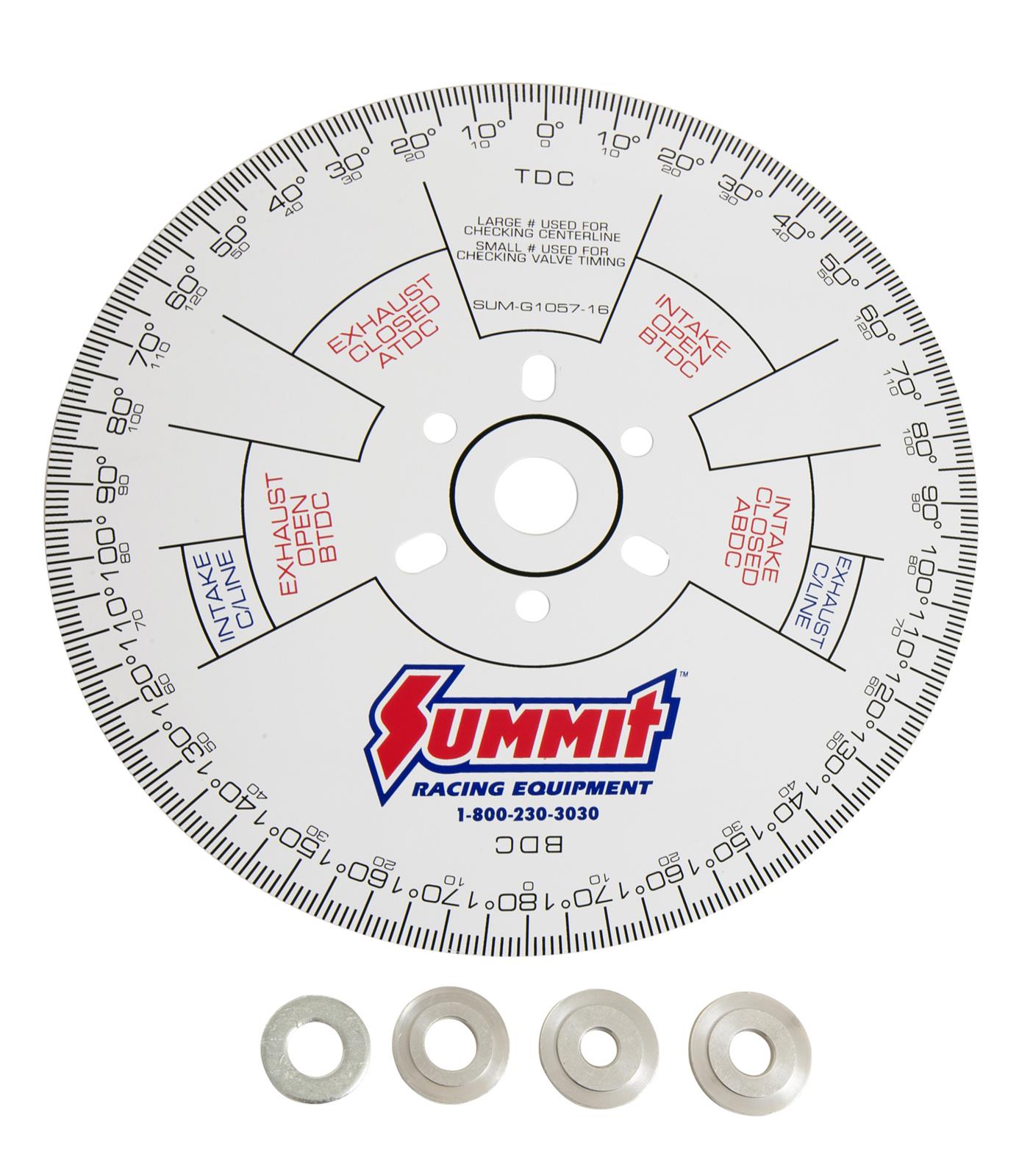
 www.summitracing.com
The Summit wheel works well.
Summit Racing SUM-G1057-16 Summit Racing™ Cam Degree Wheels | Summit Racing
Free Shipping - Summit Racing™ Cam Degree Wheels with qualifying orders of $125. Shop Degree Wheels at Summit Racing.
On the big block side of this forum, we permanently install air/fuel ratio meters to troubleshoot and/or fine tune the carburetors for performance and best fuel mileage.
This is the most common one that has been a good meter.
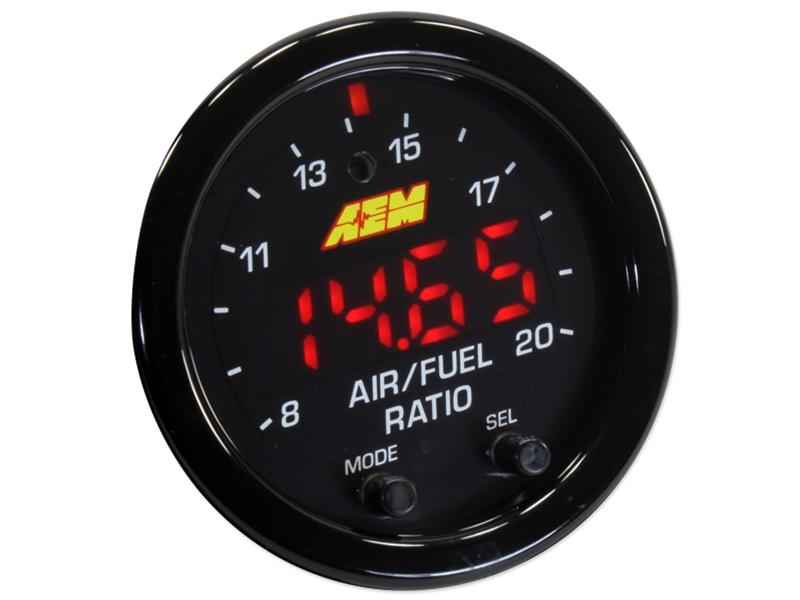 www.summitracing.com
This is the most common one that has been a good meter.
AEM Electronics 30-0300 AEM Electronics X-Series Wideband UEGO Air/Fuel Sensor Controller Gauges | Summit Racing
Free Shipping - AEM Electronics X-Series Wideband UEGO Air/Fuel Sensor Controller Gauges with qualifying orders of $109. Shop Gauges at Summit Racing.
I have access to a degree wheel also. I thought I would have to buy a kit but my friend has everything I need. He has experience, just not with FordsSince you already have access to a dial indicator, all you need is an inexpensive degree wheel to check the camshaft timing.
The Summit wheel works well.
Summit Racing SUM-G1057-16 Summit Racing™ Cam Degree Wheels | Summit Racing
Free Shipping - Summit Racing™ Cam Degree Wheels with qualifying orders of $125. Shop Degree Wheels at Summit Racing.
When you check the cam timing use the duration method where you look at closing and opening .050" points of both the intake and exhaust lobes.I have access to a degree wheel also. I thought I would have to buy a kit but my friend has everything I need. He has experience, just not with Fords
This will verify the actual cam specs along with the cam timing.
This way you can check the cam lobe profiles against the cam card spec to verify your cam was ground correctly.
A lot of people like to use the centerline method but that only tells you where the lobe centers are located and nothing about the lobe profiles.
Are you familiar with both methods?
Last edited:
No. Just the centerline method. Can I do the duration method with head on?When you check the cam timing use the duration method where you look at closing and opening .050" points of both the intake and exhaust lobes.
This will verify the actual cam specs along with the cam timing.
This way you can check the cam lobe profiles against the cam card spec to verify your cam was ground correctly.
A lot of people like to use the centerline method but that only tells you where the lobe centers are located and nothing about the lobe profiles.
Are you familiar with both methods?
Yes. I started you on the duration method, only difference is we used the harmonic balancer instead of a degree wheel and we only checked the .050” intake opening point.No. Just the centerline method. Can I do the duration method with head on?
This time you will put the dial indicator directly on the #1 pushrod without the rocker arm in the way.
As you turn the crankshaft clockwise you will record the opening and closing .050” intake lobe lift points shown on the degree wheel
Then move to the #1 exhaust pushrod and do the same.
Those 4 points should correspond to the .050” opening and closing points listed on the cam card.
Intake opens 7 degrees ATDC
Intake closes 30 ABDC
Exhaust opens 41BBDC
Exhaust closes 11 BTDC
Last edited:
Thank you sir!Intake opens 7 degrees ATDC
Intake closes 30 ABDC
Exhaust opens 41BBDC
Exhaust closes 11 BTDC

This verifies late timing. The fire is lit too late, most of the burn heat is going out the exhaust, not pushing the piston.It does run hot. Exhaust is so hot I have to wear a welding glove to operate the throttle linkage after running for five minutes.
Muffler internal baffles can collapse. Heat riser valves can stick shut.Back pressure from what?
I have full manifold vacuum at cruise. No back pressure. I suppose a brand new muffler could be bad. Everything made in China now. No heat riser. Can retarded cam timing cause the hot exhaust or just late ignition timing? I will try advancing. I have run it as high as 16* BTDC.This verifies late timing. The fire is lit too late, most of the burn heat is going out the exhaust, not pushing the piston.
Muffler internal baffles can collapse. Heat riser valves can stick shut.
Yes late valve events increase exhaust heat. At this point follow the camshaft timing procedure laid out by Mr. Muller. Late cam timing is likely.I have full manifold vacuum at cruise. No back pressure. I suppose a brand new muffler could be bad. Everything made in China now. No heat riser. Can retarded cam timing cause the hot exhaust or just late ignition timing? I will try advancing. I have run it as high as 16* BTDC.
Please explain how opening and closing the exhaust valve later causes heat.Yes late valve events increase exhaust heat.
Last edited:

Dustyford,On the big block side of this forum, we permanently install air/fuel ratio meters to troubleshoot and/or fine tune the carburetors for performance and best fuel mileage.
This is the most common one that has been a good meter.
AEM Electronics 30-0300 AEM Electronics X-Series Wideband UEGO Air/Fuel Sensor Controller Gauges | Summit Racing
Free Shipping - AEM Electronics X-Series Wideband UEGO Air/Fuel Sensor Controller Gauges with qualifying orders of $109. Shop Gauges at Summit Racing.
The engine could be running lean. I would recommend installing an AFR meter. It is one of the most needed gauges to diagnose and tune an engine. The investment is worth it and will eliminate headaches when tuning.
You have done much in troubleshooting.
15 inches of vacuum seems low with no load above idle.
Questions:
1• Do you have the exact calibration specs of the reworked distributor from the person that calibrated it?
2• Do you have a dual port or single port distributor vacuum advance diaphragm in the distributor?
3• Did you test the distributor vacuum advance diaphragm for leaks with a vacuum pump? The diaphragm should have no leak down.
4• Did you check ALL vacuum lines and ALL vacuum caps for leaks? My experience is today’s rubber vacuum lines and vacuum caps only last 3-6 months before they swell or crack. In other words most store bought rubber rubber lines and caps are junk. Running ethanol fuel accelerate breakdown of the rubber even faster.
5• If you have power brakes? If you do, did you do a leak down on the brake booster? There should be no leak down.
6• Do you have an automatic transmission? If you do, check the shift solenoid and vacuum line. They should have no leak down.
7• What type of timing light do you have? Is it a standard timing light or a dial back? I had a dial back and threw it in the trash. It was way off.
8• Are you sure that the exhaust system is not restricted? Back in 1977, my 63 Falcon Sprint convertible with the 170 Special had an overheating issue on Highways and could not run over 55 mph until the muffler was replaced. Overheating also went away. (That’s right guy’s and gal’s. In 1976, I bought a used 1963 Falcon Sprint Convertible with the 170 Special, 4 speed, bucket seats, center console, seatbelts, taillights with backup lights and wire spoke wheel covers. The only emblem on the front fenders said Sprint, not Sprint V8. My understanding is it could have been one of the few PR cars made. My understanding is that Ford did not have the V8 drivetrain ready on the time of unveiling the car. I did much research for years and I did find an article that confirms what I just written. If I only knew what I had back then.)
Last edited:
I have 18” vacuum at cruise. No I don’t have the specs for the distributor.Dustyford,
The engine could be running lean. I would recommend installing an AFR meter. It is one of the most needed gauges to diagnose and tune an engine. The investment is worth it and will eliminate headaches when tuning.
You have done much in troubleshooting.
15 inches of vacuum seems low with no load above idle.
Questions:
1• Do you have the exact calibration specs of the reworked distributor from the person that calibrated it?
2• Do you have a dual port or single port distributor vacuum advance diaphragm in the distributor?
3• Did you test the distributor vacuum advance diaphragm for leaks with a vacuum pump? The diaphragm should have no leak down.
4• Did you check ALL vacuum lines and ALL vacuum caps for leaks? My experience is today’s rubber vacuum lines and vacuum caps only last 3-6 months before they swell or crack. In other words most store bought rubber rubber lines and caps are junk. Running ethanol fuel accelerate breakdown of the rubber even faster.
5• If you have power brakes? If you do, did you do a leak down on the brake booster? There should be no leak down.
6• Do you have an automatic transmission? If you do, check the shift solenoid and vacuum line. They should have no leak down.
7• What type of timing light do you have? Is it a standard timing light or a dial back? I had a dial back and threw it in the trash. It was way off.
8• Are you sure that the exhaust system is not restricted? Back in 1977, my 63 Falcon Sprint convertible with the 170 Special had an overheating issue on Highways and could not run over 55 mph until the muffler was replaced. (That’s right guy’s and gal’s. In 1976, I bought a used 1963 Falcon Sprint convertible with inline a 170 six, 4 speed bucket seats and center console. My understanding is it could have been one of the few PR cars made. My understanding is that Ford did not have the V8 drivetrain ready on the time of unveiling the car. If I only knew what I had back then.)
2. Single port
3. yes, no leaks
4. One vacuum hose, brand new, no leaks.
6. T5
7. Both
8. Not restricted
Item 5. Do you have power brakes?
Sorry, no. I thought the one vacuum hose precluded that.Item 5. Do you have power brakes?
P, Is it pointless to advance ignition timing with a badly retarded cam!
Please explain how opening and closing the exhaust valve later causes heat.
Similar threads
- Replies
- 11
- Views
- 1K


- Replies
- 20
- Views
- 2K

- Replies
- 14
- Views
- 1K